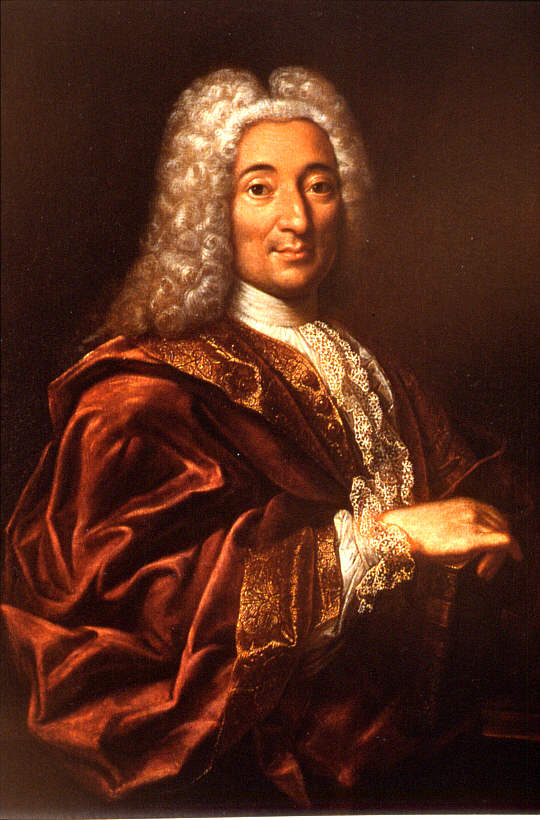
Pierre Fauchard, engraving by J. Le BelJ. Le Bel, 18th century. Public domain. Wikimedia Commons. Image source
Pierre Fauchard writes the book on dentistry
1728 · Pierre Fauchard (1679 to 1761)
In the early 1700s, teeth were often pulled by barbers or travelling tooth-drawers at fairs. There was little training and few standards.
Pierre Fauchard trained as a surgeon with the French navy and then set up practice in Paris, focusing on teeth. In 1728 he published Le Chirurgien Dentiste, or The Surgeon Dentist, a two-volume book that described how to care for and treat the teeth.
He described filling decayed teeth, cleaning teeth, braces made from metal bands and dentures held by springs. He argued that sugar was linked to decay and rejected the popular belief that tooth worms caused cavities.
He also suggested patients sit in a chair rather than on the floor, so the dentist could see and work better.
Fauchard is often called the father of modern dentistry. The organized dental office, with clear procedures and trained helpers at the chairside, grew from his push to make dentistry a science.
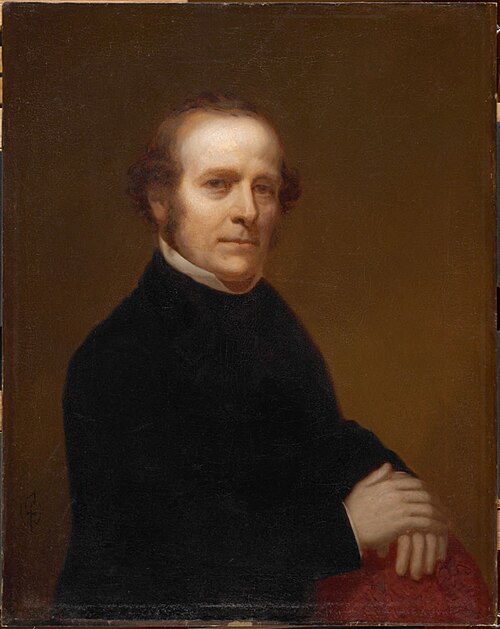
Horace Wells, portrait by Charles Thomas Wells, 1870Charles Thomas Wells, American (Hartford, CT 1839 - 1909 Hartford, CT), 1870. Public domain. Wikimedia Commons. Image source
Horace Wells tries laughing gas
1844 to 1845 · Horace Wells (1815 to 1848)
In December 1844 a dentist named Horace Wells of Hartford, Connecticut, went to a public show where people breathed nitrous oxide, often called laughing gas, for fun.
He noticed that a man who hurt his leg badly under the gas did not seem to feel any pain. Wells wondered whether the gas could stop pain during dental work.
The next day he breathed nitrous oxide while a colleague pulled one of his own teeth. He felt no pain. He then used it on his patients.
In 1845 Wells tried to show the method to doctors at Massachusetts General Hospital in Boston. The patient cried out, possibly because he got too little gas, and the audience called it a failure. Soon after, his former partner William Morton showed ether successfully, and credit for anesthesia went mostly to others.
Nitrous oxide is still used in dental offices. Dental assistants help monitor patients who receive it, a direct line back to Wells.